- The Best Events
- Posts
- Steve Mann and the Mersivity Symposium
Steve Mann and the Mersivity Symposium
The integration of humanistic artificial intelligence

Jesse Hirsh
January 19, 2024
The Mersivity Symposium is an event organized by Steve Mann and Mersivity, a sustainable technology society. The symposium brings together experts from diverse fields to discuss topics such as the integration of humanistic artificial intelligence, translating thoughts into words through brain signals, and the coalescence of technology and humanity in unprecedented ways.
The most recent symposium was held on December 14th, 2023, at the University of Toronto. The event has showcased innovative research and advancements in the relationship between technology and humanity.
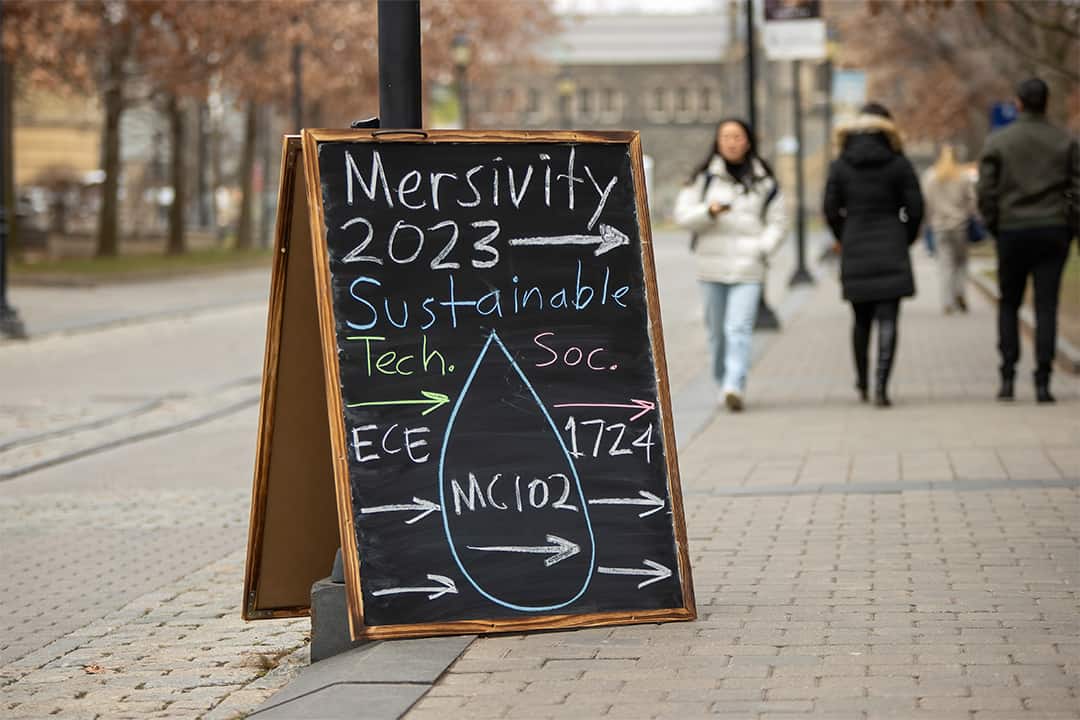
The main themes discussed at the Mersivity Symposium included the integration of humanistic artificial intelligence, advanced technologies, and the coalescence of technology and humanity in unprecedented ways. The symposium focused on the concept of Mersivity, which represents the degree to which technology is both immersive and submersive, creating a bridge between humans and the environment. Additionally, the event addressed topics such as translating thoughts into words through brain signals using non-invasive EEG technology and AI, as well as the ethical inclusivity of technology for the benefit of people and the planet.
Our pal Cory Doctorow was one of the key speakers at the recent symposium:
Humanistic artificial intelligence (AI) is an approach that emphasizes the development of AI systems in a way that is sensitive to human values, ethics, and collaboration. It is designed to augment and collaborate with humans instead of competing with them, focusing on algorithms that exist among a larger, human-based system. This approach involves learning from human input and collaboration, with a goal of understanding human language, emotion, and behavior. Humanistic AI also prioritizes the ethical inclusivity of technology for the benefit of people and the planet, and it is defined by systems that are continuously improving because of human input.
Some potential applications of humanistic artificial intelligence (AI) include:
AI-powered personal memory: Humanistic AI can be used to develop systems that help individuals remember and reflect on their interactions with people over time, enhancing their relationships and social lives.
Healthcare: In the field of healthcare, humanistic AI can be applied to tasks such as diagnosing cancer. For example, AI classifiers can be used to support pathologists in identifying cancerous cells, thereby improving the accuracy and efficiency of diagnosis.
Education: Humanistic AI can be employed in education to create AI systems that are centered around the needs and experiences of learners. This approach focuses on the human aspects of education, aiming to enhance the learning experience and support the well-being of students.
Cultural heritage and archives: Humanistic AI has applications in the management and preservation of cultural heritage, libraries, archives, and artworks. It can be used for automated or assisted classification of content, as well as for exploring, managing, and preserving cultural materials.
These examples illustrate how humanistic AI can be leveraged to benefit various aspects of human life, including personal relationships, healthcare, education, and the preservation of cultural heritage.
Steve Mann, known as "the father of wearable computing," is a prominent inventor and academic with a background in wearable technology. Mann is recognized for his early work on wearable computing, including the development of the WearComp (wearable computer) and the Eyetap, a form of smart glasses that function as a wearable computing device and a digital eye glass. Mann has been focusing on "mersivity," which involves advancing technology to connect people with the physical world, reflecting his ongoing commitment to enhancing the human experience through technology while allowing users to remain immersed in the world around them.
For more info on Mersivity please check out their website:
Mersivity is technology that serves us and our environment. Mersivity is immersive / submersive / inclusive technology.
Technology that immerses you, but disconnects you from your surroundings, is harmful to both you and your surroundings (environment). This harm goes beyond pollution and other direct harm, but also harm in the sense that if we disconnect from nature, earth, water, etc., we turn our back on earth, water, etc..
Mersivity is tech that's immersive and submersive for ethical inclusivity, creating a bridge between us ("invironment") and the world around us (environment)
Mersivity is immersive and submersive, e.g. it can immerse us (like fully immersive virtual reality) and it can be immersed / submersed by us (you can dunk it in the water or go swimming or hiking with it and it won't suddenly stop working when it gets dunked in sea water).

|


Reply